
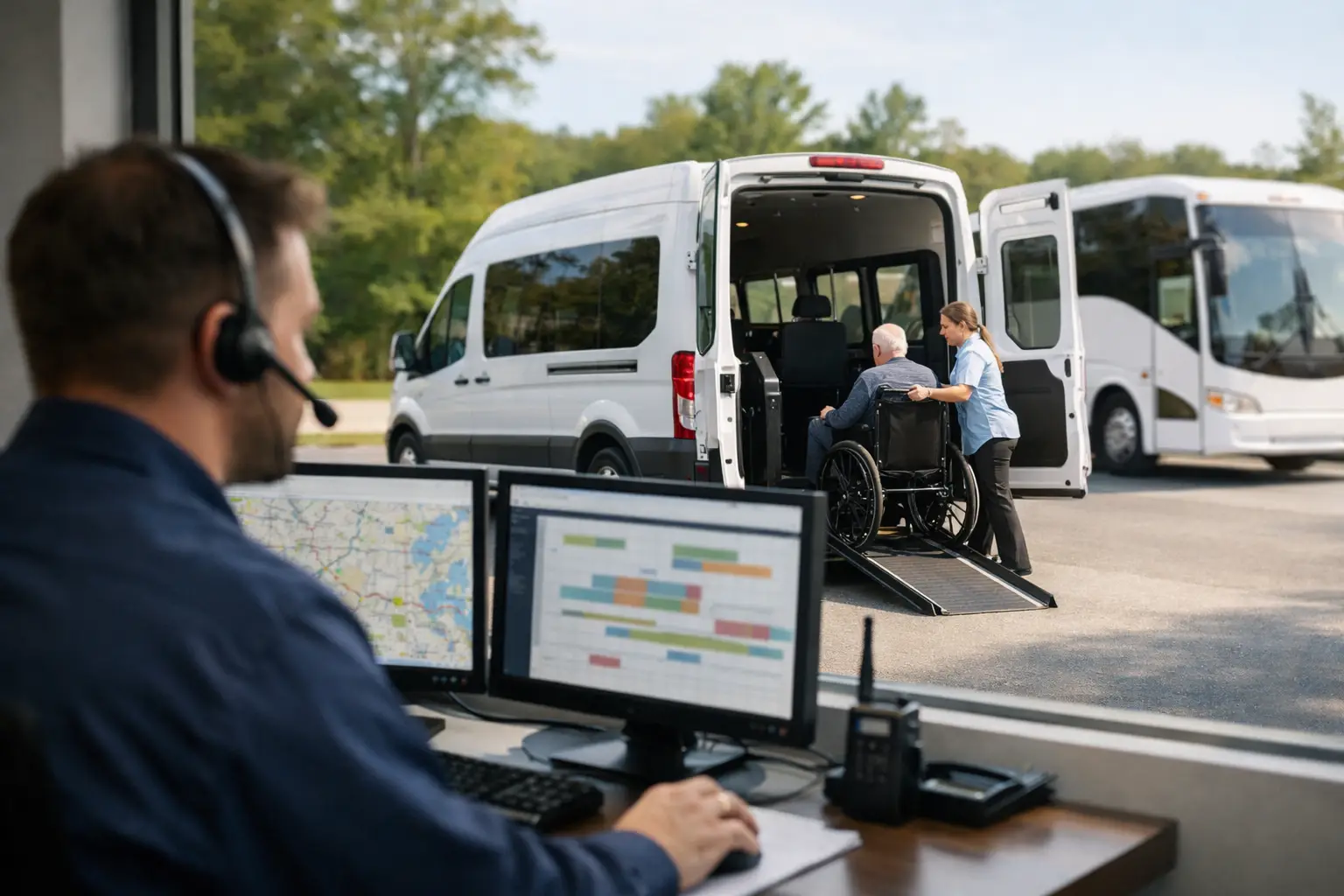
A charter dispatcher can lose an entire afternoon to a single late driver call, a changed passenger count, and a vehicle substitution that was never reflected in the customer itinerary. The issue is rarely effort. It is usually a dispatch model built around disconnected calls, spreadsheets, inboxes, and the institutional knowledge of a few experienced employees. Knowing how to modernize charter dispatch means replacing that fragile operating model with coordinated workflows, real-time visibility, and accountable decision-making.
For charter operators, dispatch modernization is not a software purchase. It is an operational redesign. The goal is to move information reliably from quote to trip assignment to driver execution to billing, while giving leadership a clear view of capacity, safety exposure, and service performance.
Why Charter Dispatch Becomes a Growth Constraint
Many established charter companies dispatch effectively until trip volume, geographic coverage, or customer complexity increases. At that point, manual coordination begins to create risk. A sales representative may confirm a trip before equipment availability is verified. Dispatch may assign a driver without seeing a pending qualification issue. A last-minute route change may reach the driver by text but never make it into the trip record.
These gaps affect more than daily efficiency. They can create overtime leakage, preventable deadhead miles, inconsistent customer communication, and avoidable compliance exposure. They also make the company harder to scale because performance depends on who happens to be working a particular shift.
For owners considering a future transaction or integration into a larger transportation platform, dispatch maturity matters. A business with documented workflows, clean trip data, and measurable operating controls is easier to evaluate, integrate, and grow than one dependent on informal processes.
How to Modernize Charter Dispatch Without Disrupting Service
The right approach is phased. Replacing every system and workflow at once can overwhelm dispatch staff and create unnecessary service risk during peak periods. Start by mapping the actual operating process, not the process described in a policy manual.
Follow a trip from the first customer inquiry through final invoicing. Identify where information is entered, copied, changed, approved, and communicated. Pay close attention to handoffs between sales, dispatch, maintenance, drivers, and accounting. Those handoffs are where most delays and data errors occur.
Then define a future-state dispatch workflow with clear ownership. Every trip should have one record that serves as the operating source of truth. That record should include customer requirements, pickup and destination details, passenger counts, vehicle and driver assignments, service instructions, pricing references, route information, and documented changes.
The objective is not to eliminate human judgment. Charter service regularly requires judgment when weather, traffic, equipment issues, group needs, and driver hours collide. Modernization gives dispatchers better information and repeatable controls so their judgment is applied to exceptions rather than basic recordkeeping.
Establish a single operational record
A centralized dispatch platform should reduce duplicate entry across departments. Sales can capture trip requirements at booking. Dispatch can validate feasibility and assign resources. Drivers can receive current trip instructions through a mobile workflow. Operations leaders can review the same information without requesting manual status updates.
A single record also improves change control. When a customer moves a pickup time or adds a stop, the system should show who made the change, when it occurred, and which parties received the update. This is particularly valuable for multi-day tours, school and university movements, corporate shuttles, and large event programs where small changes can affect equipment positioning and driver availability.
Not every operator needs the same level of system complexity. A company running a concentrated local market may prioritize dispatch, driver communication, and maintenance coordination. A regional or interstate operator may require deeper integrations for hours-of-service monitoring, route planning, electronic documents, and multi-terminal visibility. The technology stack should reflect operating complexity, not market pressure to buy every available feature.
Connect dispatch to fleet, maintenance, and safety data
Dispatch cannot make sound assignments if vehicle status lives in one system, driver credentials in another, and maintenance information in a technician's notebook. Modern dispatch connects these operational inputs before an assignment is released.
At a minimum, dispatchers should be able to see whether a vehicle is available, out of service, approaching scheduled maintenance, or restricted for a specific issue. They should also be able to confirm driver qualifications, license status, training requirements, availability, and relevant hours-of-service considerations. The exact rules and integrations will vary by operation, but the principle is consistent: do not treat equipment and driver compliance as a final check after a trip has been sold.
This connectivity supports safer decisions during disruption. If a motorcoach develops an issue before departure, dispatch can identify an appropriate replacement based on capacity, location, maintenance status, and customer requirements. If a driver calls out, the team can review qualified alternatives instead of relying on a handwritten availability list.
For diversified transportation organizations, shared technology standards can extend this benefit across divisions. NextGen Mobility views fleet technology as infrastructure that supports operational discipline, not a separate layer added after the fact.
Give drivers a reliable mobile operating channel
Drivers should not have to search through email threads, text messages, and printed paperwork to confirm the current plan. A mobile driver workflow can provide trip details, reporting instructions, customer contacts, route notes, vehicle assignments, and required documentation in one place.
The value is not simply convenience. It creates a recorded chain of communication. Dispatch can verify that updated instructions were delivered and acknowledged. Drivers can report delays, pre-trip concerns, completed inspections, and trip milestones without using multiple untracked channels.
Adoption depends on usability. A driver-facing tool that adds excessive screens or duplicates required paperwork will be resisted. Involve experienced drivers during configuration, test the workflow on a limited set of trips, and train supervisors to reinforce the new process consistently.
Build Dispatch Around Exceptions, Not Constant Chasing
A modern dispatch center should not require staff to manually ask where every vehicle is or whether every departure occurred. Routine activity should be visible through status updates, scheduled alerts, and operational dashboards. That lets dispatch focus on trips that need intervention.
Useful exception categories include late departures, unacknowledged trip changes, vehicle defects, driver availability conflicts, maintenance restrictions, missed milestones, and customer service issues. The purpose of alerts is not to create more noise. Each alert should have a defined response owner and escalation path.
For example, a late departure alert may first go to the assigned dispatcher. A missed escalation threshold may route the issue to an operations supervisor. A safety-related vehicle alert may prevent reassignment until maintenance clearance is recorded. Defined rules reduce ambiguity during high-volume periods and make after-hours coverage more consistent.
Leaders should also separate operational monitoring from performance management. Real-time screens help teams run the day. Weekly and monthly reporting should identify repeat issues: frequent equipment substitutions, recurring deadhead patterns, late-trip root causes, unprofitable trip types, or branches with unusual overtime exposure.
Use Data to Improve Capacity and Margin
Dispatch data becomes valuable when it is structured enough to support decisions beyond the current shift. Operators should be able to compare booked hours with actual hours, planned miles with actual miles, scheduled revenue with operating cost, and vehicle utilization with maintenance downtime.
This information can improve pricing and capacity planning. If a recurring customer trip consistently produces excessive deadhead, extended wait time, or driver overtime, the issue may be a pricing problem rather than a dispatch problem. If certain vehicles are routinely underutilized while others absorb disproportionate wear, assignment rules may need adjustment.
Data quality is the trade-off. Reporting is only useful if employees consistently capture meaningful status information. Avoid collecting fields that no one uses. Begin with a limited set of operational measures tied to leadership decisions, then add detail as processes mature.
Implement in Phases With Clear Operating Ownership
A practical modernization program begins with governance. Assign an executive sponsor, an operations owner, a dispatch lead, and representatives from safety, maintenance, finance, and driver leadership. Their role is to resolve workflow decisions, establish standards, and prevent the project from becoming an isolated IT initiative.
A sensible rollout often follows four stages:
- Standardize trip intake, dispatch terminology, approval rules, and required data fields.
- Deploy centralized trip management and digital driver communications to a pilot team or location.
- Integrate fleet, maintenance, safety, and financial data where it improves assignment quality or reporting.
- Expand reporting, automation, and enterprise controls after frontline teams demonstrate reliable adoption.
Measure progress through operational outcomes, not implementation activity. Look for fewer manual touchpoints, faster reassignment during disruptions, higher driver acknowledgment rates, lower avoidable deadhead, improved on-time performance, and stronger documentation of safety-related decisions.
The best first move is often modest: choose one dispatch process that repeatedly creates friction, define the accountable workflow, and make the information visible to everyone who must act on it. Once the organization sees that a cleaner operating record produces better decisions, modernization becomes a disciplined path forward rather than another technology project.