
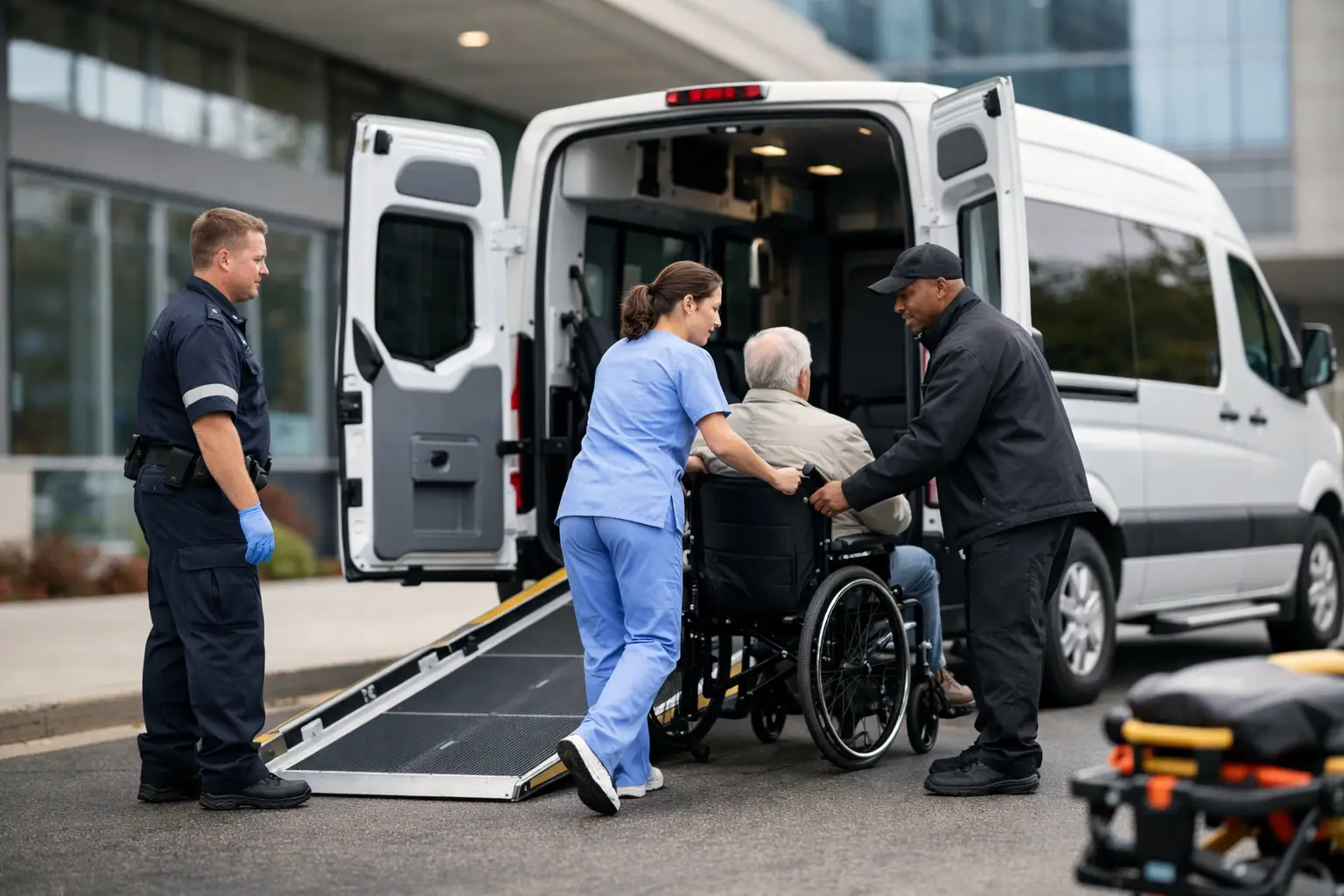
A transport company can buy vehicles, secure contracts, and install software, but the operation still succeeds or fails on people. That is especially true with medical transportation services jobs, where every role sits close to patient experience, regulatory compliance, and on-time performance. For operators evaluating growth, succession, or technology modernization, the labor model behind these jobs deserves the same scrutiny as fleet utilization or reimbursement rates.
This category is often reduced to driver hiring. That is too narrow. In practice, medical transportation is a tightly coordinated operating environment that depends on dispatch discipline, credential management, vehicle readiness, safety oversight, and increasingly, digital workflow adoption. Companies that treat these jobs as interchangeable labor usually create avoidable service risk. Companies that define them as a structured operating system tend to build more resilient platforms.
What medical transportation services jobs actually include
The public usually associates non-emergency medical transportation with the driver who arrives at the curb. From an operator perspective, the job architecture is broader and more specialized. Yes, drivers remain central, but the service line also depends on dispatchers, call center staff, field supervisors, fleet managers, compliance coordinators, credentialing personnel, billing teams, and technology support functions.
Each role affects the same outcome from a different angle. Dispatch determines routing logic and schedule efficiency. Fleet staff protect vehicle uptime and preventive maintenance compliance. Safety and compliance teams manage background checks, training records, incident response, and policy enforcement. Administrative staff keep payer documentation and trip verification clean enough to support revenue capture. When one layer underperforms, the pressure shows up everywhere else.
That matters for operators because headcount quality in this sector is not just an HR issue. It is an operational control issue. A weak dispatch function can create missed appointments just as quickly as a weak driver bench. Poor onboarding can produce higher turnover, more incidents, and weaker customer retention. In an environment where contracts are often performance-sensitive, staffing mistakes compound fast.
Why these jobs are harder than they look
Medical transportation services jobs sit at the intersection of passenger transportation and healthcare support. That makes them more demanding than standard livery, taxi, or shuttle work. Drivers must manage punctuality, passenger assistance, communication, and documentation while working with riders who may have mobility limitations, cognitive challenges, or recurring treatment schedules. The work requires consistency as much as courtesy.
For dispatch and operations staff, complexity builds throughout the day. Trips may change with little notice. Return rides can cluster unpredictably. Facility coordination can slow loading and unloading. Weather, traffic, vehicle substitutions, and call-offs can force real-time adjustments. In many markets, margins are already tight, so solving these issues with excess staffing is not realistic.
The labor challenge is not simply that the jobs are difficult. It is that they require a different management model than generic transportation hiring. Operators need role definitions, standard operating procedures, escalation paths, and digital visibility. Otherwise, managers spend their day patching service failures instead of building capacity.
The core roles that shape performance
Driver positions are still the most visible and often the hardest to fill at scale. But the best operators do not hire only for license status and availability. They hire for attendance reliability, communication discipline, patience, route adherence, and comfort with mobile workflow tools. A driver who struggles to use dispatch software or complete trip documentation correctly can create downstream billing and compliance issues even if they are courteous with passengers.
Dispatch roles deserve equal attention. In underbuilt organizations, dispatch gets treated as a clerical desk. In high-performing operations, dispatch is a command center function. These employees balance trip assignment, vehicle availability, service recovery, and customer communication minute by minute. Strong dispatchers reduce deadhead mileage, improve on-time performance, and stabilize driver productivity. Weak dispatching increases overtime, frustration, and preventable service failures.
Safety and compliance roles are often added late, after the business reaches a painful scale point. That is usually too late. Medical transportation is unforgiving when credentials lapse, incidents are documented poorly, or training standards drift by location. Dedicated oversight becomes even more important in multi-branch operations, where local habits can diverge from corporate policy if governance is weak.
Fleet and maintenance jobs also carry more strategic value than many operators assign to them. In medical transportation, a late vehicle is not just an inconvenience. It can disrupt clinical schedules, payer expectations, and facility relationships. Maintenance planning, replacement timing, and vehicle cleanliness all affect the service brand, even though they are often managed behind the scenes.
Hiring for medical transportation services jobs requires a systems view
Many operators approach hiring reactively. A driver resigns, trips are uncovered, and the team rushes to fill the seat. That pattern is common, but it keeps the organization in a permanent replacement cycle. A better model starts with workforce design.
That means identifying which jobs are truly core, where cross-training improves resilience, and what minimum operating ratios are needed by branch size. A 15-vehicle operation may function with lean administrative support. A 75-vehicle operation cannot rely on the same structure without creating bottlenecks in dispatch, safety, and fleet coordination. Growth changes the staffing model.
It also means separating trainable skills from non-negotiable traits. Software can be taught. Documentation standards can be taught. Calm under pressure, accountability, and reliability are harder to install after the fact. In sectors with persistent labor pressure, some operators overcompensate by lowering every standard. That may solve this week’s schedule problem while creating next quarter’s retention and service problem.
Technology is changing these jobs, not replacing them
One of the biggest misconceptions in this sector is that technology reduces the need for operational talent. In reality, it raises the performance expectation for each role. Dispatch systems, driver apps, telematics, AI-assisted routing, digital inspections, and integrated reporting all improve control, but only when the workforce is trained to use them consistently.
That creates a shift in job design. Drivers increasingly need comfort with mobile devices, digital manifests, and real-time communication workflows. Dispatchers need stronger data awareness and a better understanding of route logic. Managers need visibility into KPIs, not just anecdotal status updates from the field. As transportation platforms become more digitized, the distinction between operations and technology gets narrower.
For local and regional operators, this has a direct strategic implication. If the business still depends on manual scheduling habits, paper-heavy verification, and person-dependent tribal knowledge, hiring gets harder because the jobs become more stressful than they need to be. Better systems do not eliminate labor constraints, but they make jobs more manageable, training more repeatable, and performance more measurable.
That is one reason larger platform operators and diversified mobility groups are reshaping the market. When governance, fleet systems, and operational standards are centralized, individual divisions can run with more consistency. NextGen Mobility reflects that broader shift toward integrated transportation management rather than isolated service silos.
What buyers and sellers should evaluate
For owners considering an exit, medical transportation services jobs are not just a staffing line on the P&L. They are part of enterprise value. A company with stable supervisors, documented training, low incident frequency, and scalable dispatch processes presents differently than one held together by one founder and a few heroic employees. Buyers look for labor durability because labor instability usually signals operational fragility.
For operators evaluating technology adoption, the same principle applies. The right question is not whether a tool looks advanced. It is whether the workforce can absorb it without service disruption. Some systems improve dispatch planning immediately. Others require process discipline that the organization has not yet developed. It depends on management maturity, branch standardization, and training bandwidth.
In both scenarios, the most important issue is structure. Are roles clearly defined? Are managers equipped to coach performance? Is compliance monitored consistently? Can the company operate through turnover without losing control of service quality? Those are the questions that determine whether the labor model is scalable.
Building a more durable workforce
The strongest operators in this category do a few things differently. They treat frontline roles as operational assets, not disposable labor. They build documented workflows before growth forces the issue. They standardize hiring, onboarding, and safety oversight across locations. They invest in dispatch and fleet management instead of assuming all execution risk sits with drivers.
They also accept trade-offs. A stricter hiring profile may slow immediate recruitment, but it often improves retention and service consistency. More investment in supervision and compliance may raise overhead, but it reduces contract risk and operational volatility. There is no perfect staffing formula. There is only a clearer understanding of where labor quality protects the business and where underinvestment creates hidden cost.
Medical transportation will remain a people-intensive service, even as digital systems improve planning and oversight. That is not a weakness of the model. It is the reason disciplined operators can still differentiate themselves in a crowded market. When these jobs are built into a coordinated operating structure, they become more than headcount. They become the infrastructure behind dependable care access, credible growth, and a business that is easier to scale, sell, or modernize.
If you are assessing your organization, start with the jobs behind the trips, not just the trips themselves. That is usually where the next operational improvement is hiding.